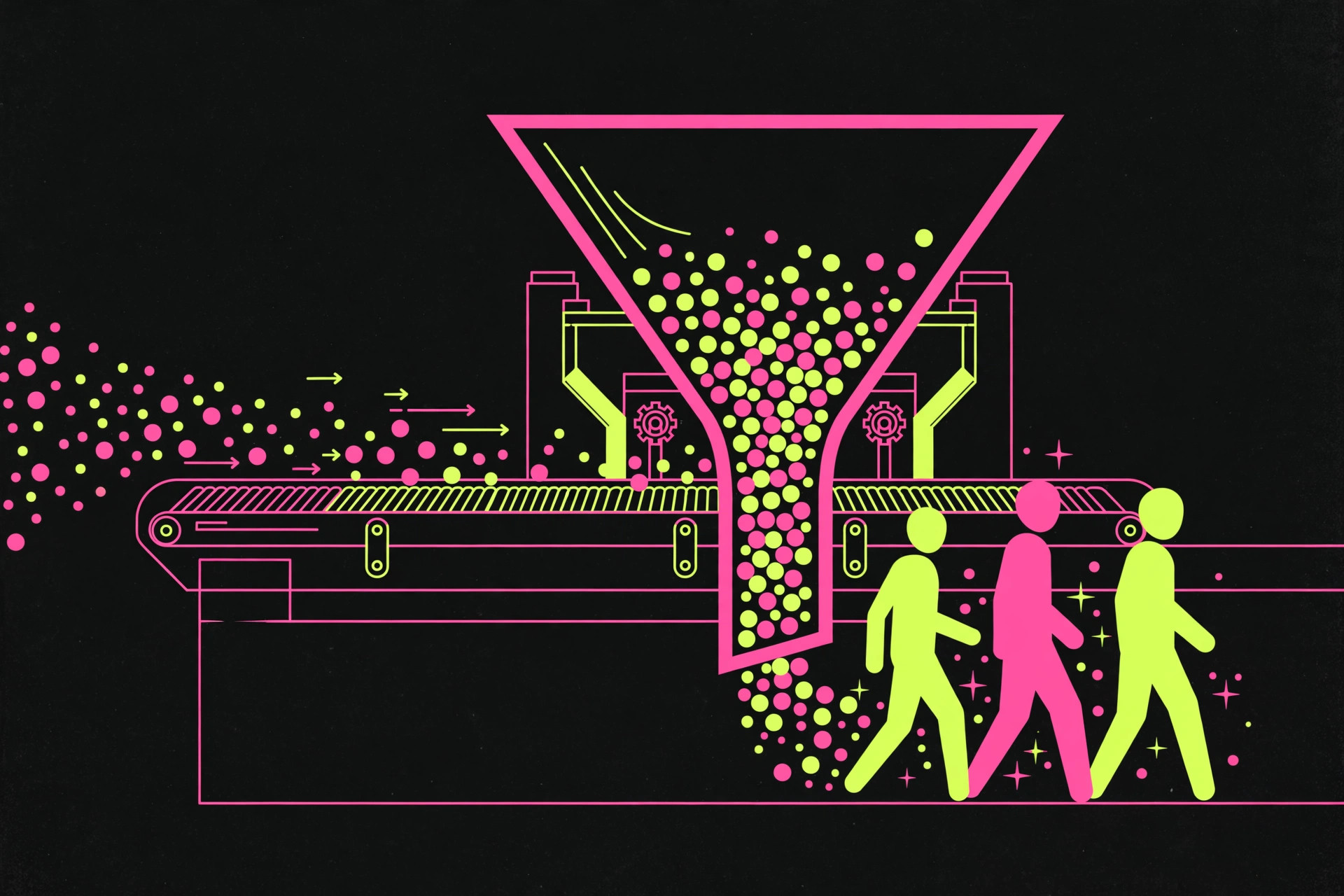
The short answer: A lead machine is a connected system that turns website visitors into booked jobs, not just page views. It captures contact info, responds fast, follows up automatically, keeps attracting the right traffic, and proves what is working.

Your website is a brochure; a lead machine is the machine behind it.
Most local business websites are digital brochures. They look fine. They list services. They have a phone number somewhere near the bottom. And then they sit there, waiting for someone to care enough to call. That is not a growth strategy. That is a hope strategy.
A lead machine is different. It does not wait. It invites the visitor to take one clear next step, grabs their contact information, responds in minutes instead of days, follows up when they go quiet, keeps new people coming in, and shows you exactly which part is producing revenue. It is not louder than your website. It is more organized, more persistent, and more honest about what is actually happening.
This post defines the concept plainly, shows how it differs from a normal brochure website, walks through the five parts that make it work, explains who it fits and who it does not, and makes the case for owning the whole thing instead of renting pieces of it from vendors who can take it away.
Your website is a brochure. A lead machine is a system.
A brochure website answers questions. A lead machine creates customers. That one sentence explains most of the disappointment local owners feel about their online presence. They paid for something beautiful, and beauty did not ring the phone.
Think about what a typical brochure site does. Someone lands on the homepage, reads a little about the company, clicks around the services pages, maybe looks at a photo gallery, and then leaves. There is no clear next step. There is no reason to hand over a name, phone number, or email address. There is no follow-up. The visit ends, and the business never knows it happened.
A lead machine treats every visit as the start of a conversation. It assumes the visitor is busy, distracted, and comparing you with two other companies. So it makes the next step obvious, reduces the friction of taking it, and keeps the conversation going even when the visitor gets interrupted. The website is still there, but now it has a job: feed the system.
The brochure mindset
The brochure mindset says the website is finished when it looks good. The owner approves the design, the developer launches it, and everyone moves on. Months later, the owner wonders why nothing changed. The answer is uncomfortable but simple: nothing was built to change anything. A brochure informs. It does not persuade, capture, or follow up.
Brochure sites also tend to talk about the company instead of the customer. They lead with history, credentials, and generic claims about quality. Visitors do not buy history. They buy a solved problem, a clear price range, a fast response, and confidence that the job will be done right. A lead machine reorganizes the same business around those buyer concerns.
The system mindset
The system mindset says the website is finished when it produces a predictable flow of conversations. Design still matters, but it serves conversion. Every page has one primary job. Every page offers one clear next step. Every step is measured. When something underperforms, it gets fixed, not admired.
This is why two businesses can have similar websites and wildly different results. One has pages. The other has a process. The process wins because buying is a process. People research, hesitate, get distracted, compare, and come back later. A system is built for that reality. A brochure is built for a world where everyone calls on the first visit, which is not the world we live in.
What a lead machine actually is
A lead machine is a set of connected parts that turn attention into revenue. Attention comes from search, ads, referrals, social media, yard signs, trucks, and every other way people find you. The machine takes that attention and runs it through the same steps every time: capture the contact, respond quickly, nurture the relationship, attract more of the right people, and prove what worked.
Notice what this definition does not say. It does not say the machine is software. Software helps, but the machine is the process plus the tools plus the habits. A business with simple tools and strong follow-up will beat a business with expensive software and no follow-up every time. The tools matter less than the discipline of using them the same way, every time.
A plain definition you can use
Here is the definition in one breath: a lead machine is a repeatable system that captures interested visitors, responds fast, follows up automatically, keeps attracting qualified traffic, and measures everything so the owner knows what to fix next. If any of those pieces is missing, you do not have a machine. You have a collection of parts.
This matters because most businesses already own some of the parts. They have a website. They have a phone. They might have email. What they lack is the connection between the parts. The website does not capture. The phone is answered late. The email list is never used. The ads run without tracking. Each part works alone, so none of them works well.
What it does all day
All day, the machine does a small number of things relentlessly. It turns visitors into contacts. It turns contacts into conversations. It turns conversations into booked jobs. It turns booked jobs into reviews and referrals. Then it turns those reviews and referrals into more visitors. That loop is the whole game.
When owners hear this, they sometimes think it sounds complicated. It is not. It is just thorough. Most businesses already want to do these things. They answer the phone when they can. They mean to follow up. They appreciate reviews. The machine simply makes sure those good intentions happen automatically, even on busy days, even when the owner is on a job site, even when the office manager is out sick.
What a lead machine is not
Clearing up what a lead machine is not will save you from buying the wrong thing. Vendors love to sell single pieces with big promises. A new website. A new ad campaign. A new software subscription. Each one can help, but none of them is the machine. Here are the three most common confusions.
It is not a prettier website
A prettier website is still a brochure if nothing else changes. New photos, new colors, and new fonts do not capture more leads by themselves. They can support the machine by building trust faster, but trust without a next step still ends in a polite visit and no contact information.
This is the trap many owners fall into. They redesign every few years, feel good for a month, and then land in the same place: a nice site with no system behind it. Design is the paint. The machine is the engine. You can repaint a car all you want, but if the engine is missing, you are still not going anywhere.
That does not mean design is worthless. Clean design, fast loading, mobile-friendly layouts, and clear messaging all help conversion. They just do not replace capture, response, nurture, attraction, and proof. If a vendor’s whole pitch is a new look, they are selling paint.
It is not an ad campaign
Ads buy attention. A lead machine converts attention. Those are different jobs. Running ads without a machine is like paying for a bigger front door while the inside of the store is a mess. More people walk in, fewer people buy, and the owner concludes that advertising does not work.
Most of the time, advertising works fine. The follow-up does not. The landing page does not capture. The response is slow. The nurture is nonexistent. Fix the machine first, and the same ad spend starts producing because every click has somewhere useful to go and someone useful to talk to.
This is also why pausing ads feels so scary to many owners. When ads are the only source of leads, turning them off turns off the business. A real machine has multiple ways to attract people, plus nurture and referrals that keep working when ad spend dips. Ads become fuel, not the whole engine.
It is not a CRM you never open
A CRM is a tool for organizing contacts. A lead machine is a system for creating revenue. Many businesses pay for a CRM, log in twice, and never build the habits that make it useful. The software sits there, empty and judging them.
The machine uses tools like a CRM, but it does not start with tools. It starts with the workflow: what happens in the first five minutes after a lead arrives, what happens on day two if they go quiet, what happens after the job is done. Then it picks tools that support that workflow. Tool-first thinking gives you subscriptions. Workflow-first thinking gives you results.
If you already own a CRM, good. Keep it. The question is whether anything automatic happens inside it. Do new leads get an instant text? Do quiet leads get a sequence of useful follow-ups? Do past customers get asked for reviews and referrals? If the answer is no, you own a filing cabinet, not a machine.
The five parts of a lead machine
Every lead machine has the same five parts. The details change by industry, but the structure does not. Learn these five and you can diagnose almost any local business in ten minutes. Find the missing part, and you usually find the missing revenue.
The five parts are capture, respond, nurture, attract, and prove. They sound simple. They are simple. Simple is the point. Complicated systems do not get used. These five get used because each one has a clear job and a clear owner.
1. Capture: turn visitors into contacts
Capture is the moment a stranger becomes a lead. Before capture, you have traffic. After capture, you have a name, a phone number, an email address, and permission to follow up. Everything downstream depends on this moment, which is why it deserves more thought than a lonely contact form in the footer.
Good capture makes the next step obvious and low-risk. Instead of asking visitors to fill out a long form and wait for a callback, it offers something specific: a fast quote, a coverage check, a free inspection, a short quiz that ends in a useful result. The visitor trades contact information for clarity. That trade is the heartbeat of the machine.
One of the strongest capture tools for local businesses is the quiz funnel, which asks a few smart questions and then routes the visitor to the right next step. It feels helpful instead of salesy, and it gives the business useful context before the first call. If you want the full breakdown, read quiz funnel vs. contact form for a side-by-side look at why guided questions beat static forms.
Capture also means being easy to reach everywhere. Click-to-call buttons on mobile. Short forms that ask for the minimum. Chat or text options for people who hate phone calls. A business that is hard to contact is telling visitors to go bother a competitor.
2. Respond: answer fast, every time
Respond is the part most businesses get wrong. A lead comes in, nobody follows up for hours, and by the time someone calls back, the customer has already booked with whoever answered first. This is not a character flaw. It is a systems flaw. Busy owners cannot watch their inbox all day. The machine can.
Fast response has two layers. The first is instant acknowledgment: a text or email within minutes that says the message was received, sets expectations, and offers a useful next step. The second is real human follow-through: a call or personal message that moves the conversation forward. Automation handles the first layer so humans can handle the second without dropping the ball.
Speed matters because interest fades. Someone who just asked for a quote is thinking about their problem right now. Tomorrow they are thinking about something else. A fast, helpful response catches them while the problem is still urgent. For the full argument, see speed to lead and why the first few minutes matter more than most owners expect.
Respond also includes routing. The right person needs to see the lead at the right time, with the context from capture attached. A plumber does not need a long email thread. They need a text with the name, the problem, the address, and the best time to call. Good systems reduce the distance between a new lead and a real conversation.
3. Nurture: follow up until they buy or tell you to stop
Nurture is the follow-up system for everyone who does not buy immediately. That is most people. They were interested enough to raise a hand, then life happened. The kids got sick. The budget got tight. Another project took priority. Without nurture, those leads rot. With nurture, they ripen.
Good nurture is helpful, not pushy. It answers common questions, shares proof, reminds them of the offer, and makes it easy to re-engage. A short email sequence can do heavy lifting here: what to expect, how pricing works, what past customers say, and a clear way to book. The tone should sound like a competent friend, not a desperate salesperson.
Email is the workhorse of nurture because it is cheap, owned, and easy to automate. A simple sequence sent over a week or two will recover jobs that would otherwise vanish. For a practical template, read nurture email sequence to see how a short series of useful messages keeps the conversation alive.
Nurture also covers the long game. Some leads take months. Seasonal businesses live on this. The homeowner who asked about a new roof in spring might buy in fall. The machine remembers so the owner does not have to. When the timing is right, the business is still there, still helpful, still easy to say yes to.
4. Attract: keep the right people coming in
Attract is how new visitors find the machine in the first place. This includes search rankings, Google business profiles, reviews, ads, social media, referrals, trucks, yard signs, and every other source of attention. A machine with no traffic is a factory with no raw material.
The key word is qualified. Ten visitors who need what you sell beat a thousand visitors who do not. Local businesses should focus on high-intent channels first: people searching for the service in their area, people asking friends for recommendations, people reading reviews before they call. Those visitors are already halfway sold. The machine just needs to catch them.
Attract also means feeding the machine consistently, not in bursts. Many owners market only when work slows down, which guarantees a feast-or-famine cycle. The machine mindset treats attraction as always-on: reviews get requested after every job, the Google profile stays updated, helpful content keeps answering buyer questions, and ads run at a steady level the business can afford.
One more truth about attraction: the best source of new leads is usually past customers. Reviews, referrals, and repeat business compound. A machine that systematically asks for reviews and referrals turns every finished job into future traffic. That is how small businesses grow without constantly paying for attention.
5. Prove: know what is working and what is not
Prove is the measurement layer. It answers the only marketing questions that matter: where did our leads come from, what did they cost, how many turned into jobs, and what was each job worth. Without this, every marketing conversation is vibes and opinions. With it, decisions get easy.
Most owners fly blind. They know they spent money on ads or a website, and they know the phone rang sometimes, but they cannot connect the two. Prove connects them. Call tracking, form tracking, source tags, and a simple dashboard turn guesses into facts. You do not need fancy software. You need consistent tracking and a habit of looking at it.
Measurement also keeps vendors honest, including us. If a lead source is not producing booked jobs at a cost that makes sense, it gets fixed or cut. No loyalty to tactics, only to results. A simple set of numbers reviewed regularly beats a complicated report nobody reads. For what to track, the marketing dashboard KPIs post lays out the small set of metrics that actually drive decisions.
Prove is also how the machine improves. When you can see that quiz leads close better than form leads, you send more traffic to the quiz. When you see that texts get answered and emails get ignored, you lead with text. The machine learns because the numbers teach it. Without proof, you are just rearranging furniture.
How the five parts connect into one system
The five parts are simple on their own. The power comes from connecting them. A connected system moves people forward without depending on anyone’s memory. Here is how the flow works, step by step, on an ordinary Tuesday.
The journey of one lead
Someone searches for a service in their town and clicks through to the site. That is attract doing its job. The page does not dump a wall of text on them. It offers one clear next step: answer four quick questions and get a fast, personalized quote. That is capture.
The visitor answers the questions and enters a phone number. Within minutes, they get a text: thanks, here is what happens next, and here is a link to pick a time. That is respond. The office sees the lead with all the answers attached, so the callback is short and useful instead of a twenty-minute fact-finding mission.
The visitor gets busy and does not book right away. Over the next week, they get a short series of helpful messages: what affects the price, what the process looks like, what other customers in the area said. That is nurture. On day six, they reply to a text and book the job.
After the job, the system asks for a review and makes it easy to leave one. The review goes up, future visitors see it, and the next person who searches finds a business with fresh proof. That is attract again, fed by the last job. Meanwhile the dashboard shows the whole path: search to quiz to text to booked job to review. That is prove.
Notice how no step depended on heroics. Nobody stayed late. Nobody remembered to follow up. The system did the remembering. The humans did the human parts: the real conversation, the real work, the real relationship. That division of labor is the whole point.
The feedback loop
Because the parts are connected, the machine improves itself. Prove tells you which traffic sources produce the best leads, so attract doubles down on what works. Prove tells you which follow-up messages get replies, so nurture gets sharper. Prove tells you where leads stall, so capture and respond get fixed at the exact weak spot.
This is the difference between a machine and a pile of tactics. Tactics are judged one by one, usually by gut feel. A machine is judged as a whole, by numbers. When the numbers say the quiz converts twice as well as the old form, the decision is made. When the numbers say leads contacted in the first few minutes book far more often than leads contacted the next day, the response process gets tightened. The system learns, and learning compounds.
It also means problems get found early. If capture breaks, perhaps the form stops working or the quiz page loads slowly, the dashboard shows the drop within days, not months. If a new ad campaign brings junk leads, prove flags it before much money is wasted. A disconnected business finds these problems by accident, usually after the money is gone.
See it in action
Abstract explanations only go so far. If you want to see what these five parts look like when they are actually connected, take a look at a live lead-machine demo built for an insurance agency. It is a different industry, but the structure is the same: clear capture, fast response, automatic nurture, steady attraction, and honest measurement. Watch how each step hands off to the next, and imagine your own services running through the same flow.
Who a lead machine is for
A lead machine is not for everyone. It is for local businesses where one customer is worth thousands of dollars, or where customers come back again and again. When each new customer matters that much, even small improvements in capture and follow-up pay for the whole system many times over.
The perfect fit
Contractors are the classic example. Roofers, remodelers, HVAC companies, plumbers, electricians, landscapers, painters. One job can be worth thousands, and the buying process involves research, quotes, and hesitation. That is exactly where capture, fast response, and nurture earn their keep. Most contractors are great at the work and terrible at the follow-up, which means the machine fills their biggest gap.
Home services beyond contracting fit too. Pest control, cleaning companies, lawn care, garage door repair. The ticket might be smaller, but repeat business and referrals make each customer valuable over time. A machine that captures every inquiry, responds instantly, and nurtures past customers into repeat bookings is a growth engine for these businesses.
Professional practices fit as well. Lawyers, dentists, clinics, financial advisors. One case or one patient can be worth a great deal, and trust matters enormously. Nurture sequences that answer common questions and share proof are especially powerful here, because buyers are anxious and comparison-shopping. The business that follows up helpfully wins the cases that others let slip away.
Agencies and B2B services round out the list. Marketing agencies, IT providers, commercial services. Fewer leads, higher value, longer sales cycles. Nurture is not optional here; it is the whole game. A machine keeps the conversation warm for months while the prospect gets budget approval or finishes their current contract.
Who should skip it
Honesty requires the other side. If you sell low-priced items to strangers who buy on impulse, a full lead machine is overkill. A coffee shop does not need a nurture sequence. It needs foot traffic and a good product. The math does not work when the customer is worth a few dollars and the sale happens in seconds.
It is also a poor fit if you cannot handle more work. A machine that doubles your inquiries is a curse when you are already booked out and have no plan to hire. Fix capacity first. Then build the machine. There is no prize for generating leads you cannot serve; there is only a pile of bad reviews.
Finally, it is a poor fit if nobody will own it. The machine needs someone, owner or manager, who looks at the numbers and makes sure the follow-up happens. That does not take much time once the system is built, but it takes some. A business that wants to set it and forget it forever will watch even a good machine slowly decay.
Why ownership matters
Here is the part vendors hope you skip. Most local businesses do not own their lead generation. They rent it. They rent their website from an agency that holds the logins. They rent their leads from a directory that can raise prices anytime. They rent their audience from platforms that change the rules without asking. Renting feels easy until the landlord changes the locks.
Ownership means you control the domain, the website, the content, the email list, the reviews, the tracking, and the data. If a vendor relationship ends, the machine keeps running because it is yours. If an ad platform gets expensive, you lean on the assets you own: your list, your reviews, your rankings, your referrals. Ownership is what turns marketing from a monthly expense into a business asset.
The rented model is everywhere in local marketing. Pay-per-lead services sell you the same leads they sell your competitors. Website rental companies charge forever and keep the site if you cancel. Agencies build everything inside their own accounts, so leaving means starting over. Each of these is convenient right up until it is not.
A real lead machine is built on property you own. Your domain. Your website on your hosting. Your email list in your account. Your tracking on your analytics. Vendors and freelancers can help build and maintain it, but the keys stay with you. That is the difference between an asset and a subscription. For the full case, read own vs. rent website and notice how many owners discover the rental trap only when they try to leave.
Ownership also changes how you think. Renters optimize for this month’s leads. Owners optimize for an asset that produces leads for years. Owners invest in reviews, content, and their email list because those compound. Renters chase the next campaign because nothing they build lasts. The machine rewards the owner mindset, and the owner mindset is what builds a business worth selling one day.
Frequently Asked Questions
How is a lead machine different from just getting more website traffic?
Traffic without a machine is just visitors. More visitors to a brochure site means more people who look around and leave. A lead machine changes what happens after the visit: it captures contact information, responds fast, and follows up. Traffic fills the top. The machine converts the middle and the bottom. You want both, but traffic alone is the most expensive way to learn that your site does not convert.
Think of it this way. If a hundred people visit and nobody can easily contact you, you have a hundred missed chances. If fifty people visit and ten become conversations, you are ahead with half the traffic. Fix the machine before you pay to fill it.
Do I need expensive software to build one?
No. The machine is the process first and the tools second. You need a way to capture contacts, a way to respond quickly, a way to follow up automatically, a way to attract visitors, and a way to measure results. Those can be simple tools used consistently. Plenty of businesses run effective machines with basic, affordable software.
What gets expensive is buying tools before defining the workflow. Then you own five subscriptions and still follow up late. Define what happens at each step, who owns it, and what the timing is. Then pick the simplest tools that support that workflow. Upgrade when the volume justifies it, not before.
How long does it take to start working?
The fast parts work fast. Instant response and basic follow-up can start producing within days of being set up, because they recover leads you are already getting but currently losing. Capture improvements usually show results within weeks as more visitors turn into contacts.
The slower parts compound over months. Reviews accumulate. Rankings improve. The email list grows. Nurture sequences get smarter as the numbers come in. Expect quick wins from response and capture, then steady compounding from attraction and nurture. Anyone promising everything overnight is selling something else.
Can I build this myself, or do I need to hire someone?
A determined owner can build a basic version. The concepts are not complicated, and the tools are more approachable than they used to be. If you have more time than money, start with the biggest leak: usually response speed and basic follow-up. Those two alone recover a surprising amount of business.
Hiring makes sense when your time is better spent on the work itself. A good builder will set up all five parts, connect them, and hand you the keys with documentation. The key word is keys. Whoever builds it, make sure you own the accounts, the domain, the site, and the data. If a builder will not hand over ownership, find a different builder.
What does it cost to run a lead machine each month?
Less than most owners fear, and the honest answer is that it depends on the tools and the ad spend. The software side is usually a modest monthly cost: a website host, an email or texting tool, call tracking, and maybe a simple dashboard. The bigger variable is how much you choose to spend attracting traffic, which you control.
The better question is what it costs not to have one. Every lead that goes quiet, every quote request answered too late, every past customer never asked for a review, that is money already spent on attention that produced nothing. The machine does not just cost money. It recovers money you are currently leaving on the table.
Want this built for you?
A lead machine turns your website from a brochure into a system that captures, responds, nurtures, attracts, and proves. Our $995 Digital Growth Diagnostic finds exactly which of the five parts is leaking revenue in your business, and hands you the plan to fix it.